
The Over Engineering Trap Why Complexity Is Killing Your MVP and How to Simplify for Success

In software development, attempting to build a flawless system before fully understanding the problem often leads to unnecessary complexity. Teams frequently invest time and resources into architectural decisions and features tailored for users or scenarios that may never materialize. This tendency, known as over-engineering, can cause delays, increased costs, and ultimately jeopardize a project’s success.
A more effective approach focuses on delivering a Minimum Viable Product (MVP) that addresses core user needs without excessive sophistication. By emphasizing rapid learning and iteration, teams can avoid wasted effort and adapt quickly, increasing the chances of creating a viable product that meets real market demands.

The High Cost of Prioritizing Flawless Architecture
Attempting to achieve a perfect system design early often delays product development and slows down market testing. Excessive focus on ideal architecture can lead to significant financial waste, as time and resources are funneled into building complex frameworks rather than validating value.
Key impacts of over-engineering include:
High initial expenses: A large portion of early budgets is spent on detailed technical planning and development, which may result in discarded work.
Lengthy scoping processes: Creating comprehensive requirements often takes months and can cost hundreds of thousands of dollars, especially when outsourced.
Reduced productivity: Complex architectures increase onboarding difficulty for teams and users, diverting skilled engineers to unproductive debates instead of delivering customer value.
Consequence
Effect
Budget overspending
Late-stage pivots become costly and difficult
Time delays
Slower market entry and feedback cycles
Team inefficiency
Talent distracted from core product goals
Balancing design ambition with practical constraints leads to more efficient workflows and better allocation of resources.

Hidden Forms of Technical Debt
Technical debt often arises not just from rushed coding but also from early decisions that fixate on complex solutions before they are necessary. When a product needs to adapt quickly, sophisticated architectures created too soon can become obsolete, effectively turning into legacy systems.
A strategy to reduce hidden debt involves adopting a stable, standardized foundation that incorporates essential components upfront. This approach minimizes frequent rework by avoiding premature technology debates and focusing development efforts on core business features.
Key advantages of this method include:
Limiting avoidable complexity
Reducing rewrites caused by shifting requirements
Streamlining focus on valuable functionality
Risky Habit
Safer Alternative
Building complex systems early
Using tested, reliable foundations
Engaging in endless tech debates
Standardizing technology choices upfront
This helps prevent invisible technical debt stemming from over-engineering and unstable project directions.

Declining Clarity and Missing Feedback Connections
Lengthy development cycles often prevent timely user feedback, increasing the risk of creating features that do not address real needs. An effective minimum viable product (MVP) focuses on delivering the essential value quickly to enable fast learning and adaptation.
Over-engineering shifts the team’s effort away from solving the main problem and toward unnecessary technical complexity. This distraction causes a disconnect between what the product should achieve and the actual output.
Maintaining a close, iterative link between product goals and development results is critical. Unlike general prototyping tools, approaches designed for MVP production prioritize continuous refinement, helping teams stay aligned with core objectives while incorporating feedback rapidly.
Key points to avoid feedback gaps:
Limit development to core functionalities
Prioritize user validation early and often
Emphasize iteration over perfection in initial releases
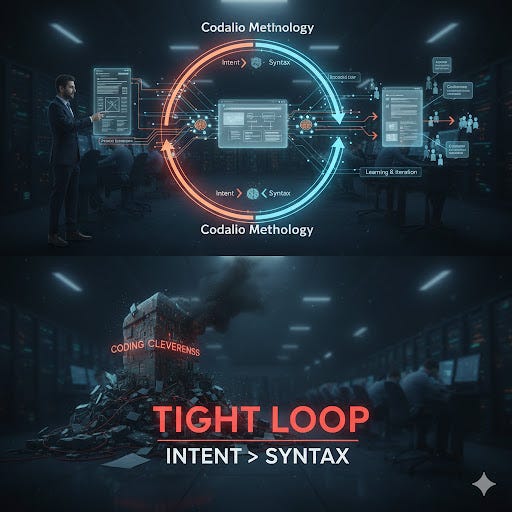
Streamlined Approaches Boost Development
Focusing on straightforward, functional code enables faster delivery and more effective user feedback. Maintaining continuity across user stories and data structures helps tools generate practical solutions that work in real environments.
This method reduces risks and increases success rates, as shown by cases where failure dropped dramatically when simplicity guided development efforts. Prioritizing clarity and iteration leads to stronger, more reliable outcomes.
Benefits of Simplicity
Impact
Faster user feedback
Speeds iteration cycles
Clear project context
Enables consistent code output
Reduced failure risk
Improves overall deliverability

Moving Toward Effective Development
Teams must avoid unnecessary complexity and focus on delivering clear value. Prioritizing a well-defined MVP helps maintain simplicity and direction.
Key approaches include:
Implementing structured workflows
Using automated safeguards to prevent scope creep
Concentrating efforts on essential features only
This method reduces wasted effort and accelerates progress toward practical, functional outcomes.
Ready to stop coding in circles and start building for value?
Codalio automates the journey from idea to production-ready MVP, ensuring you build exactly what you need—no more, no less.